Bitcoin Digital Gold: The Ultimate Guide to the Global Digital Reserve Asset
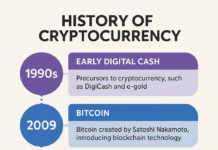
The emergence of Bitcoin in 2009 heralded a new era in finance and technology. Created in the aftermath of the 2008 global financial crisis by the pseudonymous entity Satoshi Nakamoto, it was designed as a revolutionary form of digital currency: decentralized, borderless, censorship-resistant, and, crucially, programmatically scarce.
The concept was simple yet profound: a peer-to-peer electronic cash system that required no trusted third parties. However, over the subsequent decade, its primary narrative shifted from being a transactional currency to that of a store of value, earning it the powerful and contested moniker: Digital Gold.
For sophisticated investors, financial institutions, and technologists, understanding Bitcoin is no longer optional—it is essential. This comprehensive guide goes beyond surface-level descriptions to provide an authoritative, in-depth analysis of Bitcoin’s foundational technology, its unique monetary policy, its role in the global macroeconomic landscape, and its future as a genuine competitor to traditional assets.
We will break down the intricate technical mechanisms that secure the network, dissect the mathematical scarcity that underpins its value, and analyze the complex regulatory and institutional forces shaping its destiny. If you are seeking a deep, competitive, and definitive understanding of Bitcoin as a core component of the future financial system, this guide is your essential resource.
The Genesis of Decentralization: What is Bitcoin and the Philosophy of Trustless Finance
At its core, Bitcoin is a digital ledger distributed across a massive global network of computers. It is simultaneously an asset, a network, and a protocol. Unlike traditional currencies (fiat) managed by central banks, or corporate ledgers managed by single entities, Bitcoin operates without any central authority. This is the essence of cryptocurrency decentralization, the revolutionary concept that defines the entire asset class.
The Problem Bitcoin Solved: The Double-Spending Problem
Before Bitcoin Digital Gold, digital money was impossible to implement without a central trusted intermediary (like a bank or PayPal). Why? Because digital information is inherently easy to copy. If you could copy a digital coin and spend it twice, the system would collapse. This is known as the double-spending problem.
Satoshi Nakamoto’s genius was not creating the concept of digital money, but solving the double-spending problem using cryptography, coupled with a distributed consensus mechanism. The entire network constantly verifies and agrees upon the sequence of transactions, making it mathematically impossible to cheat the system without controlling more than 51% of the network’s computing power—an exponentially costly and difficult feat.
Key Characteristics of Bitcoin
- Decentralization: No single point of failure (no CEO, no corporate headquarters, no central bank). The ledger exists on tens of thousands of nodes globally.
- Immutability: Once a transaction is confirmed and recorded in a block, it is practically irreversible and cannot be altered or censored.
- Transparency (Pseudonymity): The public ledger (the blockchain) is visible to everyone, but users are identified only by cryptographic wallet addresses, not personal names.
- Scarcity: The supply is mathematically capped at 21 million coins, guaranteeing that its inflation rate decreases over time.
This foundation of trustlessness is what gives Bitcoin its immense value proposition. By eliminating the need for trust in fallible human institutions, it provides a monetary asset secured solely by math and energy expenditure.
The Engine Room: How Bitcoin Works and the Proof-of-Work Mechanism
To truly appreciate Bitcoin’s robust security model and its claim as Digital Gold, one must understand its underlying mechanisms. The operation of the network hinges on two interconnected concepts: the blockchain structure and the Proof-of-Work mechanism (PoW).
The Blockchain: An Unbroken Chain
The blockchain is the chronological, immutable public ledger. Transactions are bundled together into “blocks.” Once a block is verified and sealed, it is cryptographically linked to the previous block via a hash. This chain of blocks forms the immutable record.
- Block Time: On average, a new block is mined and added every 10 minutes.
- Difficulty Adjustment: To maintain this 10-minute average, the protocol automatically adjusts the difficulty of the mathematical puzzle every 2,016 blocks (roughly every two weeks), ensuring that regardless of how much computing power joins the network, the block production rate remains constant.
Proof-of-Work (PoW): Securing the Network with Energy
The Proof-of-Work mechanism is the consensus algorithm used by Bitcoin. It is the process by which ‘miners’ compete to validate transactions and add the next block to the blockchain.
- The Competition: Miners use specialized hardware (ASICs) to repeatedly guess a specific string of characters (a hash) that meets a target difficulty requirement set by the network. This guessing process is known as ‘hashing’ and requires massive amounts of electrical power.
- The Reward: The first miner to find the correct hash broadcasts the valid block to the network. The network verifies the block’s legitimacy. If accepted, the miner receives the block reward (newly minted Bitcoin) plus all transaction fees contained within the block.
- Security Guarantee: PoW is Bitcoin’s primary security measure. The only way to commit fraud (e.g., double-spend) is to control the majority of the network’s total hashing power (the 51% attack). Because the mining infrastructure requires colossal financial and energy investment, any attempt to attack the network is prohibitively expensive, making it far more profitable to follow the rules. This energy expenditure transforms electricity into verifiable, secure digital scarcity, justifying its position as a unique, non-sovereign asset.
This process is what makes the Bitcoin ledger fundamentally resistant to censorship and manipulation, a critical feature for any long-term store of value.
The UTXO Model Explained: A Cash-Like System
Unlike many other cryptocurrencies (like Ethereum) that use an Account Model (which tracks a single balance, much like a bank account), Bitcoin uses the Unspent Transaction Output (UTXO model). Understanding this is key to understanding Bitcoin’s inherent security, privacy, and architecture.
The UTXO model operates conceptually like physical cash:
- Outputs, Not Balances: When you receive Bitcoin, you aren’t credited to a single balance; you receive an output from a prior transaction. This output remains “unspent” until you use it.
- Spending the Whole Note: Imagine you have two dollar bills: one worth $10 and one worth $5. If you need to pay someone $7, you must use the entire $10 note. The transaction takes the $10 UTXO as input and creates two new outputs: $7 to the recipient, and $3 returned to you as “change.” The original $10 UTXO is destroyed, and two new UTXOs are created.
- Transaction Integrity: In the UTXO model, the total inputs of a transaction must equal the total outputs (plus the transaction fee). This mathematical necessity enforces integrity and prevents unauthorized creation of coins.
| Feature | UTXO Model (Bitcoin) | Account Model (Ethereum) |
|---|---|---|
| Concept | Physical Cash / Multiple Notes | Bank Account Balance |
| Spending | Spends previous unspent outputs entirely | Directly subtracts from a single balance |
| Privacy | Better, as inputs and outputs change frequently | Lower, as transactions are linked to a single, persistent account address |
| Security | Enhanced, due to high transaction integrity verification | Simplified state management, better for complex smart contracts |
The UTXO model provides greater parallelism, allowing multiple transactions to be processed independently, and offers a more granular level of security and verification than the simpler account-based system.
The Monetary Thesis: Bitcoin Scarcity and The Halving
The most potent argument for Bitcoin’s classification as Digital Gold rests on its programmed, unchangeable monetary policy centered around absolute Bitcoin scarcity. This scarcity is codified through two primary mechanisms: the 21 million coin cap and the Halving event.
Absolute Scarcity vs. Geological Scarcity
Gold has maintained its value for millennia because it is naturally scarce. We rely on geology and the unpredictable nature of mining to control its supply. However, gold’s supply is not fixed; we continue to mine and discover new reserves, meaning its inflation rate (annual mine production / above-ground stock) hovers consistently around 1.5% to 2.5%. This is a continuous, inflationary supply.
Bitcoin Digital Gold, conversely, has mathematical, absolute scarcity:
- Fixed Cap: Only 21 million BTC will ever be created. This limit is enshrined in the source code and cannot be changed without consensus from the entire network, which is economically infeasible.
- Verifiable Supply: The current circulating supply and the issuance schedule are 100% transparent and auditable by anyone. You do not need to trust a central bank or a mining company; you just need to run the Bitcoin software.
This verifiable, fixed supply creates a unique, deflationary pressure on the asset’s purchasing power over the long term, making it the hardest form of money ever created.
The Bitcoin Halving Explained: The Supply Shock Event
The Bitcoin Halving is a pre-programmed event that cuts the reward miners receive for validating a block by 50%. This event occurs automatically roughly every four years, or after every 210,000 blocks are mined.
- Initial Reward (2009-2012): 50 BTC per block
- 1st Halving (2012): 25 BTC per block
- 2nd Halving (2016): 12.5 BTC per block
- 3rd Halving (2020): 6.25 BTC per block
- 4th Halving (2024): 3.125 BTC per block (Upcoming in 2028: 1.5625 BTC)
The Economic Impact:
The Bitcoin Halving is an instantaneous supply shock. By reducing the rate at which new Bitcoin is created, it dramatically lowers the inflation rate of the supply. This stands in sharp contrast to fiat currencies, where central banks can decide to expand the money supply infinitely, often leading to devaluation.
The Halving process ensures that Bitcoin’s supply curve is predictable and decelerating, eventually resulting in zero new supply around the year 2140. Historically, this event has served as a powerful catalyst for the price, as the supply entering the market decreases while demand, driven by increasing Bitcoin Adoption, either remains constant or accelerates.
The Digital Gold Debate: Bitcoin vs Gold as a Store of Value
The comparison between Bitcoin vs Gold is central to its role as a modern store of value. While gold has thousands of years of history and cultural acceptance, Bitcoin Digital Gold offers superior characteristics for the modern digital economy.
| Feature | Gold (Traditional Store of Value) | Bitcoin (Digital Gold) |
|---|---|---|
| History & Acceptance | Thousands of years; universal acceptance. | 16+ years; rapidly growing institutional and public acceptance. |
| Scarcity | Geological/Economic. Supply is not fixed (inflation ~1.5%-2.5% annually). | Mathematical/Absolute. Fixed cap of 21 million (inflation approaches 0%). |
| Verifiability | Difficult to verify purity; requires expensive assays. | Easy to verify (Cryptography & Blockchain); transparent supply. |
| Portability | Extremely difficult and risky to move large amounts. | Borderless; can move billions of dollars in value instantly and cheaply. |
| Divisibility | Limited; impractical to divide into tiny, usable pieces. | Highly divisible (1 BTC = 100 million satoshis). |
| Censorship | Highly susceptible to seizure by governments (e.g., US Executive Order 6102). | Highly resistant to censorship due to cryptocurrency decentralization and PoW. |
The Institutional Shift and Financialization
The financialization of Bitcoin—the creation of regulated products like Spot Bitcoin ETFs—marks a watershed moment. These vehicles allow vast amounts of institutional capital to flow into the asset without the need for technical self-custody. This legitimizes Bitcoin and integrates it into traditional financial systems, significantly boosting its credibility as a long-term reserve asset. The sheer volume of inflows and outflows, despite market turbulence, demonstrates that large financial players now view Bitcoin as a permanent, if volatile, asset class.
Correlation and Diversification: Is BTC a Safe-Haven Asset?
A key debate in the Bitcoin vs Gold narrative is whether Bitcoin currently acts as a “safe-haven” asset, meaning it holds or increases its value during periods of high financial stress.
Academic and market analyses often reveal a nuanced picture:
- Risk-On Tendency: Historically, Bitcoin has frequently exhibited a positive correlation with risk-on assets, such as the tech-heavy Nasdaq or the S&P 500, particularly during intense market optimism. When risk sentiment declines, Bitcoin often sells off alongside equities. This suggests that, unlike gold (which often has a negative correlation with stocks), Bitcoin is still often viewed as a high-beta growth asset by many institutional players (Source: Morningstar Research).
- Crisis Divergence: Studies show that during recent, acute geopolitical or banking crises, gold has often maintained a more stable safe-haven role, while Bitcoin’s high volatility sometimes amplified portfolio risk. For example, during certain banking stresses, while Bitcoin experienced short-term appreciation, its overall volatility profile makes it less predictable than gold in a true “flight to safety” scenario.
- Low/Shifting Correlation: Despite these trends, the rolling correlation between Bitcoin and traditional assets like the S&P 500 often remains relatively low (near zero or slightly positive), suggesting a diversification benefit (Source: WisdomTree Market Insights). An asset with a low correlation can reduce the overall volatility of a mixed portfolio, even if it is volatile itself.
The Conclusion: While Bitcoin possesses all the ideal monetary properties of a pristine store of value (scarcity, verifiability, portability), its market behavior currently places it in a transitional phase—a high-growth, high-risk asset whose volatility is expected to decrease as its market capitalization grows and it achieves wider, deeper Bitcoin Adoption.
Overcoming Scalability: Layer 2 Solutions and Bitcoin Adoption
The Bitcoin network’s deliberate design choice of a 1MB block size and a 10-minute block time prioritizes security and decentralization over raw transactional throughput (the ‘Scalability Trilemma’). While this makes it the most secure ledger on Earth, it limits the network to approximately 7 transactions per second (TPS), making it unsuitable for micro-transactions or massive global commerce.
The solution to achieving mass Bitcoin Adoption without compromising the base layer’s security lies in Layer 2 Solutions—protocols built on top of the Bitcoin blockchain that inherit its security but handle transactions off-chain.
The Lightning Network (State Channels)
The most successful and widely adopted Layer 2 Solutions is the Lightning Network. It operates using “state channels.”
- Opening a Channel: Two parties (or more) lock a certain amount of Bitcoin on the main chain by creating a multisignature address. This establishes a payment channel.
- Off-Chain Transactions: Within this channel, the parties can send and receive near-instantaneous, virtually free transactions amongst themselves off the main blockchain. These transactions update a shared “state” (the balances) but are not broadcast to the entire world.
- Closing the Channel: When the parties decide to settle, they broadcast the final balance sheet (the net result of potentially thousands of micro-transactions) to the main Bitcoin blockchain, settling the final state securely.
Lightning transforms Bitcoin Digital Gold into a highly effective medium of exchange, enabling global micro-payments and facilitating true, everyday Bitcoin Adoption in countries where local currencies are unstable.
Emerging Layer 2 Technologies
The Layer 2 Solutions landscape is rapidly evolving beyond state channels:
- Sidechains (e.g., Liquid): These are separate, independent blockchains that are pegged to Bitcoin (users lock BTC on the main chain to issue a corresponding token on the sidechain). They offer faster confirmation times and the ability to add features like smart contracts, but they introduce a new set of trust assumptions (usually a federation of institutions acting as validators).
- Rollups: Borrowing concepts from Ethereum scaling, Bitcoin Rollups move transaction execution off-chain but commit the transaction data back to the Bitcoin main chain, effectively bundling hundreds or thousands of transactions into a single, compact Proof-of-Work mechanism-secured transaction (Source: Chainlink).
- Client-Side Validation (e.g., RGB Protocol): RGB represents a highly advanced form of scaling where transaction verification is done off-chain by the client receiving the payment, rather than by the miners. It uses Bitcoin’s UTXO model to securely “color” or tag specific UTXOs with asset information (e.g., non-fungible tokens or complex smart contract states), allowing for programmable complexity without bloating the main chain. Only cryptographic commitments (proofs) are written to the main chain, significantly enhancing scalability and privacy.
These innovations are critical, demonstrating that Bitcoin is not merely static technology but an evolving, foundational financial layer capable of supporting global commerce while maintaining its core security. [Your Website: Deep Dive into Bitcoin Layer 2 Scaling]
Bitcoin Regulation and The Path to Institutional Legitimacy
The global regulatory environment is perhaps the single largest factor influencing the next stage of Bitcoin Adoption and its long-term viability as Digital Gold. Bitcoin Regulation presents a complex dual challenge: it creates risk but also guarantees legitimacy.
The Global Regulatory Spectrum
The regulatory landscape remains fragmented, ranging from total acceptance to outright prohibition (Source: Oxford Academic, arXiv):
- Acceptance/Integration: Countries like El Salvador have adopted Bitcoin as legal tender. Major Western economies have integrated Bitcoin into their regulated financial systems through investment products like ETFs, signaling official recognition of it as an asset class.
- Clarity and Frameworks: Jurisdictions like the European Union (with MiCA—Markets in Crypto-Assets Regulation) are creating comprehensive legal frameworks designed to mitigate risk and consumer harm while encouraging innovation.
- Restrictions and Bans: Certain nations impose strict bans or severe restrictions on cryptocurrency trading or mining, often citing financial stability or capital control concerns.
Regulatory Effects on Store of Value Narrative
Thoughtful, clear Bitcoin Regulation is crucial for its status as a reliable store of value:
- Increased Trust and Legitimacy: Clear rules remove uncertainty. When institutions and retail investors know the legal boundaries, they are far more likely to commit capital, driving greater market depth and stability.
- Anti-Money Laundering (AML) and Sanctions: Regulators prioritize preventing illicit use. While this challenges Bitcoin’s original cryptocurrency decentralization ethos by forcing centralized entities (exchanges, custodians) to comply with “Know Your Customer” (KYC) rules, it is a necessary step for integration into the global financial system.
- Consumer Protection: Rules targeting market manipulation and fraud protect investors, increasing public confidence, a prerequisite for any global financial asset.
While some see regulation as a threat to Bitcoin’s freedom, most analysts agree that regulated, legitimate access pathways are the key to unlocking the multi-trillion-dollar institutional capital required to solidify Bitcoin Digital Gold‘s place as a global reserve asset. [Your Website: Global Cryptocurrency Regulatory Tracker]
Historical Context: Bitcoin’s Price History and Macroeconomic Drivers
To understand the future trajectory of Bitcoin Digital Gold, one must examine its turbulent past and the macroeconomic forces that drive its price.
Four-Year Cycles and the Halving Impact
Bitcoin’s price history is characterized by sharp, volatile cycles, largely corresponding to the approximately four-year Bitcoin Halving schedule.
- Pre-Halving: Accumulation and anticipation.
- Post-Halving: Supply shock, followed by a sustained bull run as the reduced new supply meets rising demand.
- Peak and Bear Market: A period of price correction, often 70-80% drawdowns, characterized by over-leveraged speculation, regulatory fear, or global economic distress.
This cyclicality is a unique feature of Bitcoin, contrasting sharply with the continuous, unpredictable price movements of traditional commodities like gold, whose supply is not programmatically altered.
Drivers of Value: Fiat Inflation and Sovereign Debt
Bitcoin’s creation was a direct response to central banking practices. Its value proposition is strongest when fiat currencies show signs of weakness:
- Inflation Hedge: In periods of high inflation (as experienced globally in the 2020s), the demand for assets with fixed Bitcoin scarcity, like Bitcoin and gold, tends to rise as investors seek shelter from the erosion of purchasing power.
- Sovereign Risk: Countries experiencing currency collapse or severe capital controls often see citizens turning to Bitcoin as a necessity (Source: European Central Bank). Here, Bitcoin acts as a transactional currency and a store of value, providing a lifeline when the local fiat currency fails. This use case is often ignored by Western investors but is crucial for global Bitcoin Adoption.
The Risk of the ‘Lost’ Supply
Beyond the 21 million cap, the functional Bitcoin scarcity of Bitcoin is amplified by the fact that a significant portion of the supply is permanently lost. Estimates suggest that 20% or more of all mined Bitcoin (mostly from the early years) is irretrievably lost due to misplaced hard drives, lost private keys, or the presumed death of early miners.
This means the actual circulating supply available to the market is considerably less than the theoretical 21 million, further enhancing the underlying Bitcoin scarcity narrative and placing upward pressure on its long-term value.
The Technical Future: Innovation Beyond the Base Layer
The focus on Digital Gold often overshadows the continued innovation happening on and around the Bitcoin protocol. These developments cement its future as a foundational layer for programmable finance.
SegWit and Taproot: Transaction Efficiency
Even the base protocol is upgraded through soft forks:
- Segregated Witness (SegWit, 2017): This upgrade increased the block capacity effectively and, crucially, fixed transaction malleability, paving the way for the development of Layer 2 Solutions like the Lightning Network.
- Taproot (2021): The most significant recent upgrade, Taproot enhanced privacy by making complex transactions (like those from multi-signature wallets or Lightning channels) look like simple, single-signature transactions on the chain. It also reduced transaction fees and improved scripting flexibility, essential for future application development.
Ordinals, Inscriptions, and the Culture Shift
Recent innovations like the Ordinals protocol and Inscriptions (sometimes referred to as Bitcoin NFTs) allow data—images, text, even small programs—to be inscribed directly onto individual satoshis (the smallest unit of Bitcoin).
While controversial in terms of network congestion, this demonstrated new utility: using the absolute security of the Bitcoin chain not just for monetary value, but for digital artifact storage. This concept expands the definition of Bitcoin Adoption from a purely financial asset to a programmable base layer for digital culture and immutable data.
This expansion of utility strengthens Bitcoin‘s foundational value proposition, proving that the network can support more than just financial transfers without sacrificing its core tenets of security and cryptocurrency decentralization. [Your Website: Tutorial on Advanced Bitcoin Wallet Security]
Final Verdict: Bitcoin as a Generational Asset
Bitcoin is not a static asset; it is a continuously evolving, decentralized network secured by immense computing power and anchored by a mathematically fixed supply cap. It satisfies every criteria required of a pristine store of value—durability, fungibility, verifiability, and portability—while significantly surpassing gold in the digital realm.
While its journey is characterized by volatility, reflecting its rapid adoption and ongoing market-structure transition, the long-term trend is clear: Bitcoin Digital Gold is progressing from a fringe technological curiosity to a globally recognized, institutionally accepted, and structurally integrated reserve asset. Its future success is less about whether it will replace gold, and more about whether it will become the default, non-sovereign digital asset of the 21st century. The underlying fundamentals—absolute Bitcoin scarcity, unyielding Proof-of-Work mechanism, and rapid evolution via Layer 2 Solutions—suggest the answer is unequivocally yes.
For investors who understand its UTXO model, the implications of the Bitcoin Halving, and the complex landscape of Bitcoin Regulation, the opportunity lies not just in short-term speculation, but in securing a stake in a new, un-inflatable global financial base layer.
Take the Next Step: Strategic Portfolio Integration
Navigating the complexities of market cycles, assessing regulatory risk, and integrating a volatile asset like Bitcoin Digital Gold into a long-term strategy requires expertise. Understanding the technology and the macroeconomics is only the first step.
Desired Action: Don’t speculate—invest strategically. Contact us today for a confidential consultation to discuss how Bitcoin works and how verifiable Bitcoin scarcity and its role as the ultimate store of value can be optimized within your existing portfolio for generational wealth preservation. Click here to contact us for a consultation and structure your future in digital assets.